 IRUSU
Access your orders, rewards, and more
© 2026 IRUSU
IRUSUAccess your orders, rewards, and more
© 2026 IRUSU
Virtual Reality (VR) is transforming the way students learn, explore and understand complex subjects. With the advancement of immersive technology, schools, colleges and educational institutions are increasingly exploring VR-based learning to make classroom education more interactive and engaging.
Traditional teaching methods built around textbooks, chalkboards and lectures are now complemented by digital boards, tablets, computers and VR headsets. These technologies give students additional ways to explore concepts and experience educational content.
IRUSU X-Reality Lab helps educational institutions explore this transformation through VR lab setup solutions that bring together immersive hardware, educational applications and learning content.
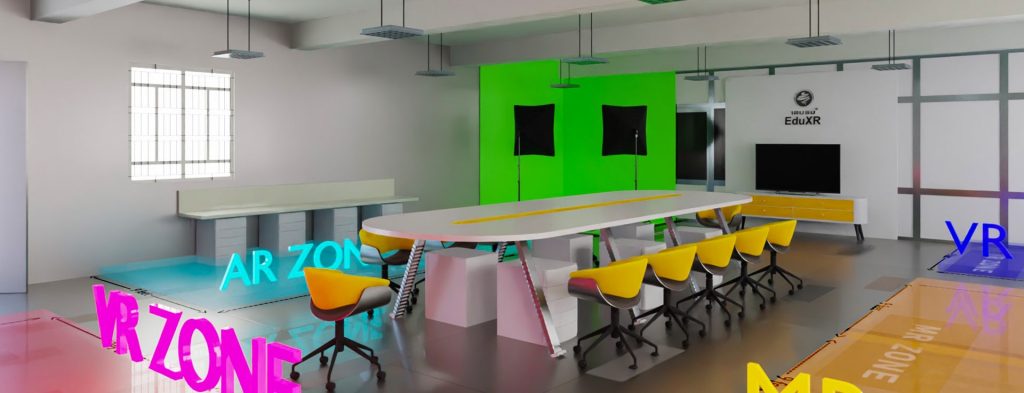
An educational VR lab is a dedicated learning environment equipped with Virtual Reality headsets, compatible hardware, educational applications and immersive learning content.
Instead of only reading about a subject, students can explore virtual environments, interact with three-dimensional models and experience simulations designed to support classroom learning.
IRUSU provides X-Reality Lab setup solutions to help schools and colleges introduce immersive technology into their educational environment.
The final equipment, applications and configuration can be planned according to the institution's requirements, available infrastructure and budget.
Explore IRUSU X-Reality Lab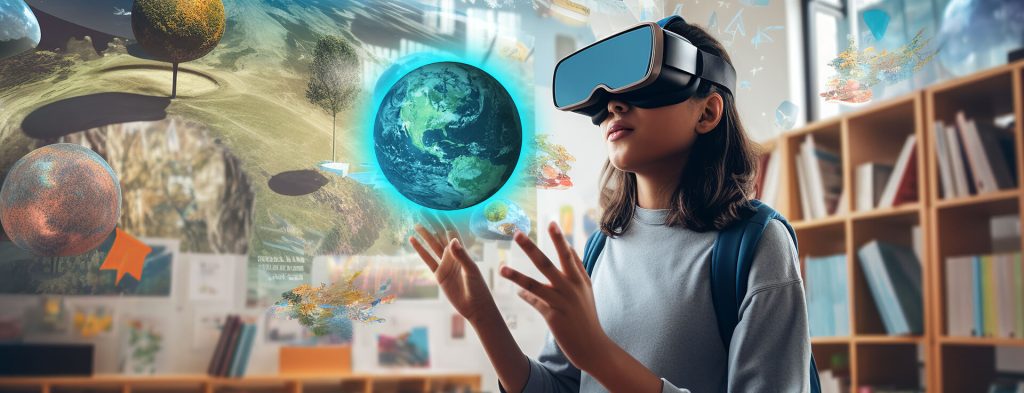
VR has the ability to take students beyond the four walls of a classroom and introduce them to interactive three-dimensional learning environments.
Imagine students exploring historical landmarks, studying the human body through 3D anatomy models, travelling through space or understanding scientific concepts through virtual simulations.
These experiences can help make abstract concepts easier to visualise and give students another way to interact with their lessons. Teachers can use immersive content to complement traditional teaching methods and encourage active participation.
Many educational concepts are difficult to understand through two-dimensional diagrams and textbook explanations alone. Virtual Reality can bring three-dimensional objects and environments into the learning experience.
For example:
Students have different learning preferences and may understand concepts at different speeds. VR provides an additional visual and interactive method that teachers can incorporate into their lessons.
Keeping students interested in a lesson can be challenging, particularly when subjects involve complicated concepts or abstract information.
VR applications allow teachers to introduce interactive learning experiences that encourage students to explore and participate instead of only listening or reading.
When students actively interact with educational content, they get an additional opportunity to connect classroom concepts with visual experiences.
VR can therefore support more engaging lessons and help teachers introduce subjects in different ways.
Some practical activities involve equipment, chemicals, machinery or environments that require careful supervision. Virtual simulations can provide students with an opportunity to explore certain concepts and practice procedures in a controlled digital environment.
For example, students may explore laboratory procedures, understand equipment operation or observe scientific processes through suitable educational simulations.
Virtual practice does not replace real laboratory experience, but it can complement classroom instruction and help students become familiar with concepts before practical activities.
Subjects such as anatomy, physics, chemistry and engineering often involve processes and structures that are difficult to visualise.
VR applications can represent these concepts through interactive 3D models and simulations. Students can explore structures from different perspectives and understand spatial relationships more clearly.
For example, a student learning human anatomy can explore the position and structure of different organs using a compatible VR anatomy application.
VR can introduce new ways for students to participate in classroom activities. Teachers can organise group discussions, guided virtual explorations and subject-based activities around immersive learning content.
Students can share observations, discuss what they have experienced and connect virtual activities with classroom lessons.
Not every school or college can arrange physical visits to historical sites, industrial facilities, specialised laboratories or distant geographical locations.
Suitable VR content can provide virtual explorations of selected environments without requiring students to travel to those locations.
This can add another dimension to classroom teaching, particularly when physical access to a location is difficult.
A properly planned educational VR lab can support learning activities across multiple subjects and departments.
Explore human anatomy, organs, body systems and biological structures using interactive 3D educational content.
Introduce students to scientific concepts, visual demonstrations and selected virtual simulations.
Explore historical environments, landmarks, landscapes and geographical locations through virtual experiences.
Visualise mechanical components, engineering structures and technical concepts in immersive environments.
Explore virtual spaces, buildings, layouts and three-dimensional design concepts.
Use suitable simulations to introduce equipment, procedures and practical concepts in a controlled virtual setting.
The equipment required for a VR lab depends on the institution's objectives, number of students, subjects and applications to be used.
A typical VR lab planning process may include the following components:
IRUSU aims to make immersive technology more accessible to educational institutions through VR hardware, software applications and X-Reality Lab solutions.
Our objective is to help schools and colleges explore new teaching methods by bringing together suitable VR equipment and educational content.
From interactive anatomy learning to virtual explorations and subject-based experiences, IRUSU works with institutions to identify solutions that align with their educational goals.
Setting up an educational VR lab involves more than purchasing headsets. Institutions need to identify the right equipment, applications, learning content and infrastructure.
The exact scope and implementation process will depend on the requirements agreed upon with the institution.
Virtual Reality offers schools and colleges an additional way to introduce interactive and experiential learning into their classrooms. From exploring human anatomy to understanding engineering concepts and discovering historical environments, VR can help students engage with subjects in new ways.
VR is not intended to replace teachers, textbooks or traditional practical education. Instead, it can complement existing teaching methods and provide additional opportunities for visualisation, exploration and interaction.
With IRUSU X-Reality Lab solutions, educational institutions can explore how VR hardware, applications and immersive content can become part of their learning environment.
Bring immersive learning experiences to your institution with IRUSU X-Reality Lab solutions.
Contact our team to discuss your requirements, equipment selection and educational VR lab setup.
Explore X-Reality Lab Request a VR Lab EnquiryA VR lab is a dedicated educational space equipped with Virtual Reality headsets, compatible hardware and educational applications. It allows students to explore selected subjects through immersive and interactive digital experiences.
VR labs can support visualisation, experiential learning, student engagement, interactive demonstrations and exploration of complex subjects through three-dimensional content.
Depending on the available applications, VR can support biology, human anatomy, physics, chemistry, history, geography, engineering, architecture and vocational education.
A VR lab may include VR headsets, educational applications, supporting computers or devices where required, charging facilities, storage and a suitable learning space. The final equipment depends on the institution's requirements.
Yes. VR learning experiences can be planned for different educational levels and departments. The applications and content should be selected according to students' age groups, curriculum and learning objectives.
The cost depends on the number and type of VR headsets, educational applications, infrastructure, content requirements and implementation scope. Contact IRUSU to discuss your institution's requirements and request a customised quotation.
IRUSU offers VR hardware and software solutions for immersive learning. The equipment and applications included in a particular lab setup depend on the institution's requirements and the agreed project scope.
Educational institutions can visit the IRUSU X-Reality Lab page or submit an enquiry through our VR product and lab enquiry form.
Contact IRUSU: Explore our X-Reality Lab solutions and discuss your educational VR requirements with our team.